Evidence analysis
How to Spot Contradictions in Witness Statements
A contradiction matters only when two claims cannot both be true. Good mystery solving separates imperfect memory from a conflict that changes who had the time, access or opportunity to commit the crime.
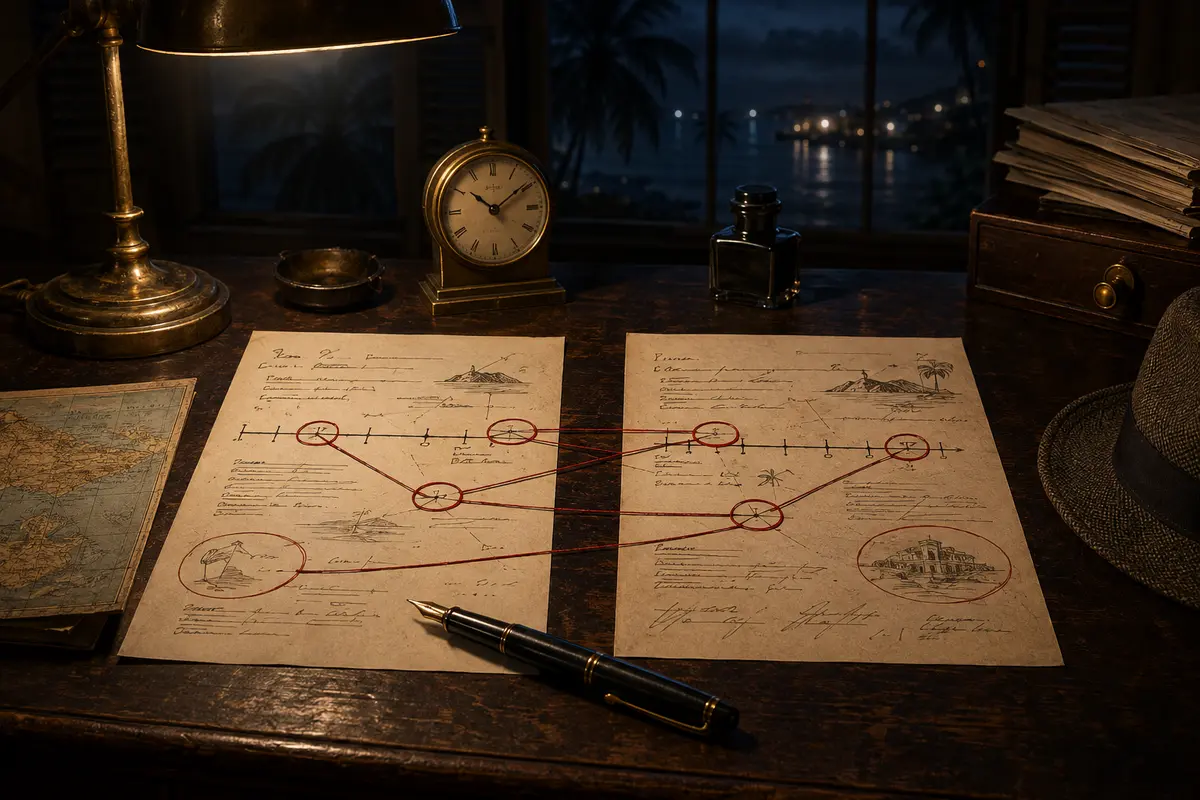
Separate observations from interpretations
‘I heard the clock strike’ is an observation. ‘It must have been midnight’ is an interpretation. Break each statement into what the witness directly perceived, what they inferred and what they learned from someone else. Only then can you compare like with like.
- Underline exact claims about time, place, people and objects.
- Flag estimates and emotionally loaded descriptions.
- Do not convert ‘around nine’ into exactly 9:00.
Build a comparison table
List the event down one side and each relevant source across the top. Compare the statement with receipts, registers, timetables, distances and other independent records. Two witnesses repeating the same story are not independent if one heard it from the other.
- Prefer contemporaneous records to later recollection.
- Check whether clocks shared the same time.
- Allow realistic walking, preparation and waiting time.
Classify the conflict
A discrepancy may be harmless, explanatory or decisive. Harmless differences concern colour or approximate duration. Explanatory differences arise from viewpoint or poor lighting. Decisive contradictions make the claimed sequence physically impossible or show knowledge the speaker should not possess.
- Ask whether correcting the discrepancy changes the suspect list.
- Look for impossible knowledge as well as impossible movement.
- Keep motive separate from proof of opportunity.
Test the innocent explanation first
Before calling a statement a lie, ask whether a reasonable innocent explanation fits all facts. A strong accusation survives that test. In fair-play mysteries, the decisive contradiction normally works with other evidence rather than naming the killer on its own.