Mystery craft
The Difference Between a Clue and a Red Herring
A clue changes what is logically possible. A red herring attracts attention towards an explanation that the full evidence does not support. Learning the difference prevents atmosphere and suspicion from replacing deduction.
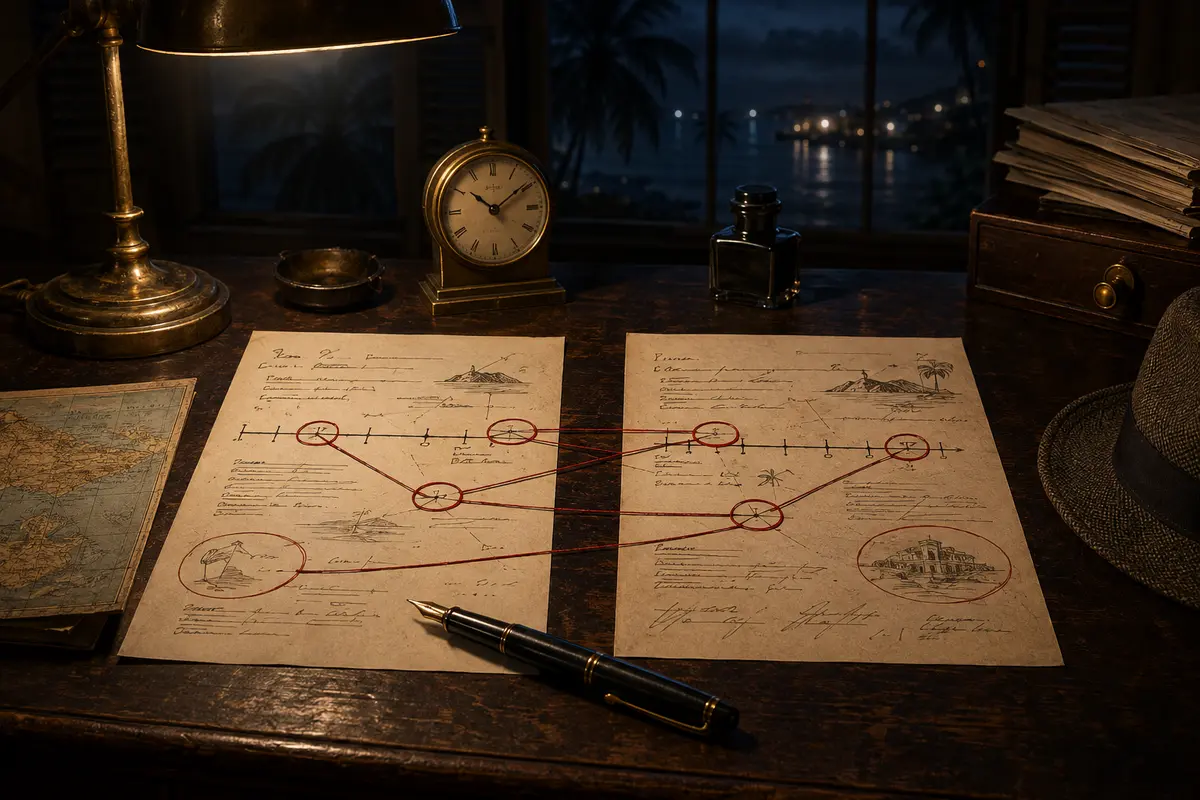
A clue performs logical work
A functional clue establishes, excludes, orders or connects information. It may appear ordinary—a receipt time, a damp cuff or a missing signature—but removing it would weaken the path to the solution.
- Does the detail rule something in or out?
- Can it be combined with another fact?
- Does the solution explain why it was included?
A red herring is plausible but incomplete
A fair red herring is not a false fact. It is a real detail that encourages a premature interpretation. A quarrel may suggest motive, or a hidden letter may suggest secrecy, while timing and access ultimately show that the apparent suspect could not have acted.
- Check whether suspicion is supported by opportunity.
- Ask what alternative explanation fits the same fact.
- Do not discard the detail; reinterpret it.
Atmosphere is neither clue nor deception
Rain, candlelight and an anxious crowd may establish tone without determining the answer. Atmospheric details become clues only when the puzzle uses them—for example, rain affecting footprints or darkness limiting what a witness could see.
- Keep decorative details out of the grid.
- Promote a detail to evidence only when a rule connects it to the case.
- Do not assume vivid writing means logical importance.
Use the solution test
At the end, every genuine clue should appear in the inference chain, and every major red herring should have a coherent innocent explanation. If a supposedly decisive fact is never used, it may be redundant rather than a fair red herring.