Start here
How to Solve a Hidden Number Puzzle
Each case file starts with a register of possible numbers. The clues describe the hidden number. Your job is to cross out every candidate that fails at least one clue, then check that the survivor fits every clue.
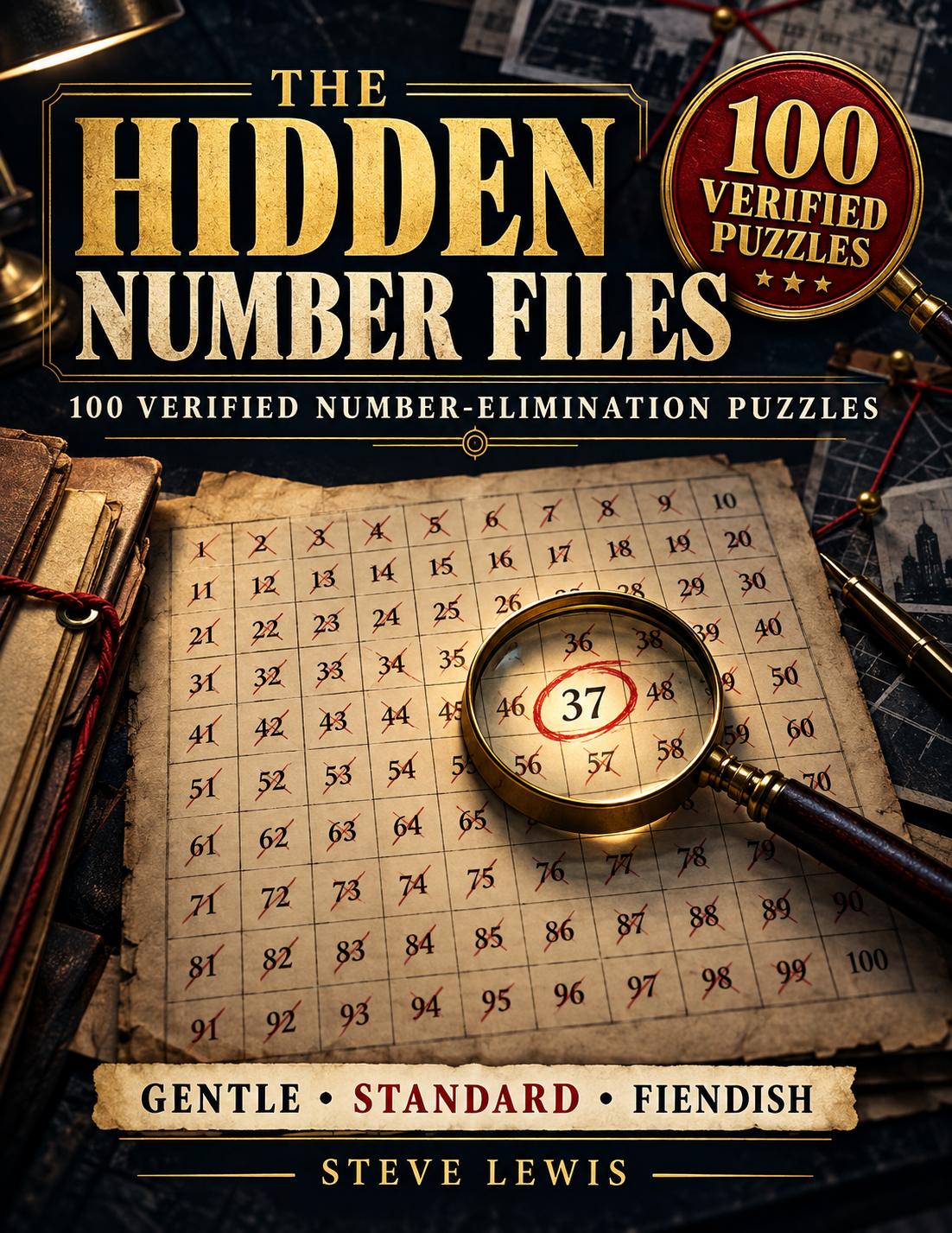
Begin with the register
Read the candidate numbers before applying any clue. You are choosing from this register, not trying to invent a number that fits the clues. Keep a candidate if the clue allows it, even if another number currently looks more likely.
- Mark a number only when you can name the clue it fails.
- Keep the register visible as you work.
- Undo a cross if you realise you misread a clue.
Apply one clue to every remaining number
Start with the clearest rule, such as odd or even, greater than a stated value, or within a stated range. Test it against every uncrossed candidate. Then repeat with the next clue. A clue describes the number itself: do not treat it as an instruction to change the number.
- Even numbers divide by 2 without a remainder.
- A range includes its endpoints when the wording says 'at least' or 'at most'.
- Read 'greater than' and 'less than' strictly; equality does not pass.
Check the final answer
When one number remains, read every clue again and test that number against each one. If two or more remain, revisit clues involving digits or remainders. If none remain, undo the most recent elimination and check your interpretation. In The Hidden Number Files, the generated puzzles are checked for one solution and each clue is needed to make it unique.
- A surviving candidate must pass all clues.
- Every crossed number must fail at least one.
- Use Check answer only after recording your own choice.